

The most versatile centerpiece types for any event are low florals, garland or runner setups, tall elevated arrangements, and balloon-based statements. Which one wins comes down to three things: table shape, ceiling height, and budget.
- Round tables: low floral or a single tall statement piece
- Long banquet tables (8 to 10 feet): garland runners or repeated low clusters
- High ceilings or a stage backdrop: tall/elevated arrangements or balloon columns
Pro Tip: Keep any low centerpiece under 12 inches tall so guests can actually see and talk to each other across the table. It’s the single most-violated rule in event decor.
Key Takeaways
The right centerpiece type depends on table shape and ceiling height first, and budget second, with low florals and garlands covering most events at the lowest cost.
| Point | Details |
|---|---|
| Follow the 12-inch rule | Keep low centerpieces under 12 inches so guests can talk across the table without obstruction. |
| Match style to table shape | Round tables suit one centerpiece; long tables need runners or repeated low clusters. |
| Budget by style | Bud vases and balloons run cheapest; tall elevated arrangements cost the most per table. |
| Mix 2 to 3 styles | Combining tall pieces with low clusters or runners adds variety without raising the average cost per table. |
| Buy ready-made kits with buffer | Usnovelty’s balloon and multi-pack kits simplify sourcing; order one or two extras per event for backup. |
Table of Contents
- Types of Event Centerpieces at a Glance
- A Closer Look at Each Centerpiece Style
- Matching Centerpiece Style to Your Table and Venue
- How to Choose the Right Centerpiece Style
- Materials: Fresh, Dried, Silk, and Balloon Alternatives
- Product Categories That Match Each Centerpiece Type
- What Party-Supply Sellers See Behind the Counter
- Where to Buy Ready-Made Centerpiece Supplies
- Sources
Types of Event Centerpieces at a Glance
Before you commit to a look, it helps to know what’s actually out there. Event designers generally group the main centerpiece styles into a handful of families. Each one solves a different problem.
- Low floral clusters: Compact arrangements that sit below eye level. Best for round tables where conversation matters. Budget-friendly to mid-range.
- Bud vases and collections: Single stems in small glass vessels, grouped in threes or fives down a table. Budget-friendly, and among the most affordable options available.
- Compote arrangements: Flowers spilling out of a footed bowl or shallow dish. Mid-range, works on rounds and long tables alike.
- Tall/elevated arrangements: Height on a slim stand with the floral mass starting well above eye level. Premium, best for ballrooms and formal receptions.
- Low lush arrangements: Dense, full floral clusters with no visible vase. Mid-range, works well for garden or rustic themes.
- Garland/runner styles: Greenery or floral strands laid directly on the table. Mid-range, purpose-built for long tables.
- Floating candles with florals: Blooms and lit candles in glass bowls of water. Budget to mid-range, best for evening receptions.
- Candle-only centerpieces: Clustered pillars or votives with no florals at all. The most budget-friendly option, but check venue flame rules first.
- Balloon centerpieces: Air-filled clusters or arches on weighted bases. Budget-friendly and dramatic, especially for birthdays and casual events.
- Edible/fruit-forward displays: Fruit, dessert, or candy arranged as the table’s focal point. Budget to mid-range, doubles as a favor.
- Single-stem/minimalist designs: One statement flower or branch per vessel. Budget-friendly, fits modern or Scandinavian-style tables.
- Dried, silk, or forever florals: Preserved or artificial blooms styled like fresh ones. Mid-range upfront, but reusable across events.
Each type carries its own sizing rules and setup logistics, which is where most planning mistakes actually happen.
A Closer Look at Each Centerpiece Style
Picking a style from a list is easy. Executing it without a table that looks bare, top-heavy, or blocked by flowers takes a bit more detail.
Low floral clusters
These sit at 8 to 10 inches tall, well under the 12-inch conversation threshold. They work on nearly any round table and photograph well because they never block a guest’s face across the table.
- Pro: Cheapest full-floral option, easy to transport, forgiving of last-minute changes
- Pro: Keeps sightlines open, which matters more than people expect at a seated dinner
- Con: Can look sparse on tables wider than 60 inches without a bigger arrangement or a second small piece
Ask your florist whether stems are wired for stability. Loose, unwired stems shift during transport and can arrive lopsided.
Bud vases and collections
A cluster of three to five slim vases, each holding one or two stems, spaced down the table’s centerline. This is the most budget-friendly style in the whole category.
- Pro: Low cost per table, easy to mix and match colors
- Pro: Naturally stays under the conversation-height rule
- Con: Needs a runner or extra tabletop décor underneath, or it reads as too minimal
Confirm whether water is included at delivery. Empty vases mean your venue staff has to fill dozens of them an hour before doors open, which rarely goes smoothly.
Compote arrangements
A wide, shallow bowl on a pedestal base, filled with flowers that cascade slightly over the rim. This style splits the difference between low and lush.
- Pro: Reads as more formal than a bud vase without the cost of a tall arrangement
- Pro: Works on both round and rectangular tables
- Con: The pedestal base needs a stable, level surface, so check linens for bunching
Pro Tip: Compotes photograph beautifully from a seated angle because the bowl frames the flowers instead of hiding the stems. Ask your photographer where they’ll be shooting from before you finalize the height.
Tall or elevated arrangements
Height starts around 24 inches above the table, per the dramatic-elevation guideline most designers follow, with the floral mass sitting well above eye level so guests can still see across the room. This is the most expensive style in the category, often running from $150 to $400 or more per table depending on the flowers used.
- Pro: Creates real visual drama in ballrooms with 10-foot-plus ceilings
- Pro: Frees up tabletop space for place settings and favors
- Con: Heavy stands can require venue rigging approval, especially near stages or dance floors
Ask vendors directly whether tall structures need rigging or floor anchoring. Some venues ban freestanding stands over a certain height for liability reasons, and you don’t want to find that out the week of the event.
Low lush arrangements
Dense, rounded clusters of flowers and greenery with no visible container. These read as the most “garden party” of the low styles and pair naturally with rustic or garden venues.
- Pro: Full, romantic look without the height that blocks sightlines
- Pro: Hides a plain rented vase completely
- Con: Uses more stems per arrangement than a bud vase or compote, which raises the per-table cost
Garland and runner styles
Greenery, dried florals, or fresh blooms laid in a strand directly down the table, sometimes with candles or bud vases tucked into the greenery. This is the standard answer for long banquet tables, since a single large arrangement gets lost on anything longer than about 8 feet.
- Pro: Scales naturally to any table length by adding or trimming garland sections
- Pro: Cheaper per foot than a row of separate arrangements
- Con: Fresh garland wilts faster than boxed arrangements, so it needs same-day delivery
Ask whether the garland kit includes floral picks or just greenery. A bare greenery garland looks unfinished without a few tucked-in blooms or candles down the line.
Floating candles and candle-only setups
Floating candles sit in shallow glass bowls, often with a few blooms or petals scattered on the water’s surface. Candle-only setups skip the florals entirely and rely on light alone to set the mood, which makes this the cheapest option on the whole list.
- Pro: Extremely low cost, especially with a votive candle multi-pack
- Pro: Works for both formal and casual events with equal effect
- Con: Many venues restrict open flames, so confirm policy before you commit to the look
Pro Tip: Always ask your venue coordinator for their flame policy in writing before you buy a single votive. Battery-operated flameless candles look nearly identical in photos and remove the restriction entirely.
Balloon centerpieces
Clustered balloons on a weighted base, or a small balloon arch used as a table’s focal point. Air-filled designs last longer indoors than helium and skip the rental fees that come with helium tanks. A standard tabletop cluster uses 5 to 7 balloons, and a base weight of 4 to 6 ounces keeps it stable indoors.
- Pro: Budget-friendly with dramatic visual size for the price
- Pro: No wilting, no water changes, works for birthdays and casual events especially well
- Con: Outdoor setups need heavier anchors than indoor ones because of wind
Usnovelty’s balloon mini cascade centerpiece kit gives you a ready-made base and cluster without sourcing individual balloons and weights separately.
Edible and fruit-forward displays
Fruit, dessert stacks, or candy arranged as the table’s visual center, sometimes doubling as a shared snack or favor. This works especially well for casual birthdays or brunch-style events.
- Pro: Doubles as food, so it isn’t purely decorative spend
- Pro: No wilting or flame concerns whatsoever
- Con: Needs refrigeration or timing coordination if it includes perishable items
Single-stem and minimalist designs
One flower, branch, or stem per small vessel, spaced evenly across the table. This is the most modern-looking option on the list and among the cheapest.
- Pro: Extremely low cost per table
- Pro: Never blocks sightlines, since it stays low and slim
- Con: Can look under-decorated on a formal or traditional-style table
Dried, silk, and forever florals
Preserved botanicals or high-quality silk blooms styled to look like fresh arrangements. These remove the risk of wilting and water spills that comes with anything fresh, and they can be reused for a second event or stored in rental inventory.
- Pro: No day-of hydration needed, no timing pressure on delivery
- Pro: Reusable, which lowers the effective cost across multiple events
- Con: Higher upfront cost per piece than fresh, though it amortizes over repeat use
Matching Centerpiece Style to Your Table and Venue
Table shape decides more than most planners expect. A single well-scaled arrangement fits a round table because every guest sees it from the same distance. Long tables behave differently: one big centerpiece in the middle leaves the ends looking bare, so runners or repeated low clusters read better down the full length.
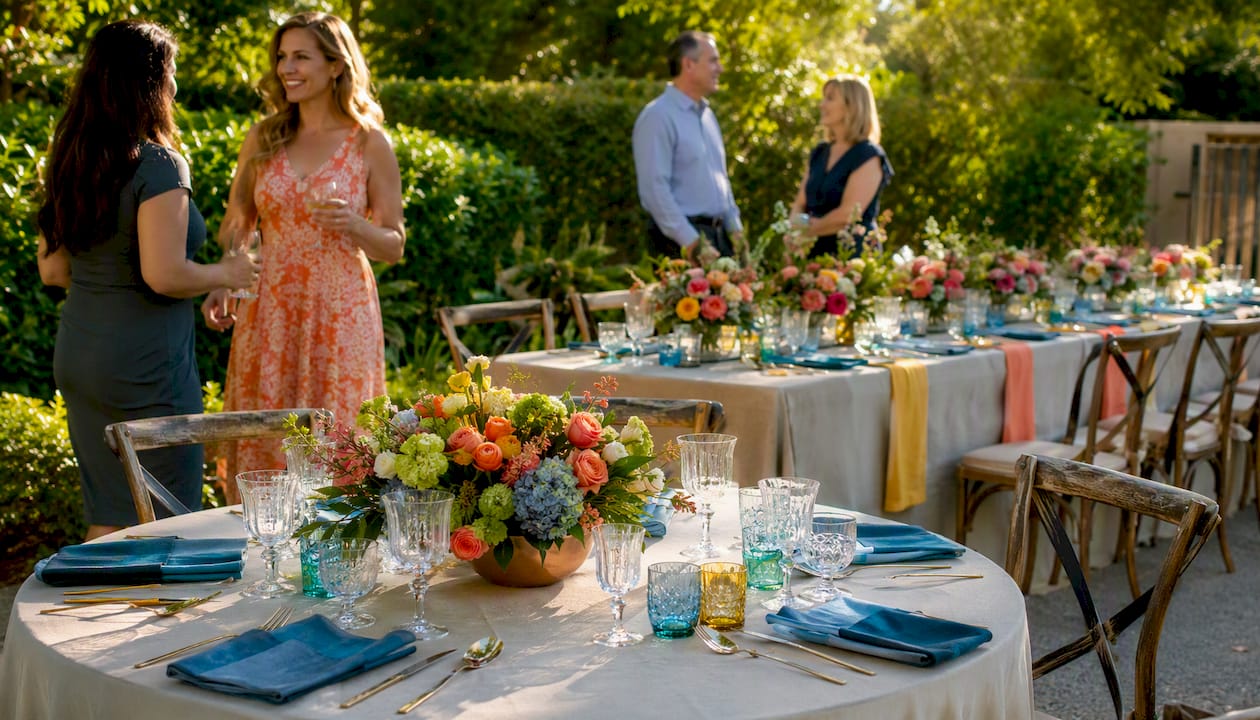
Keep low pieces under 12 inches and start any tall arrangement’s floral mass at 24 inches or higher. Anything in between the two heights blocks sightlines without adding drama, which is the exact zone to avoid.
Venue type adds its own constraints:
- Ballrooms with high ceilings can carry tall arrangements or balloon columns without looking lost in the space.
- Barns and rustic venues tend to favor garland runners and low lush arrangements that match the exposed-wood aesthetic.
- Tents often have center poles and lower clearance, which rules out tall stands near the pole line.
- Gardens and outdoor spaces need weighted bases for balloons and heavier vessels for florals, since wind is a real factor.
- Restaurants and urban venues with smaller tables usually do best with bud vases or single-stem designs that don’t compete with existing decor.
Pro Tip: At your venue walkthrough, put a stack of plates or a phone at 12 inches and another at 24 inches on a sample table, then sit down. If you can’t see the person across from you, the centerpiece is too tall for that gap.
How to Choose the Right Centerpiece Style
Work through this in order, and you’ll avoid the two most common mistakes: picking a style before measuring the table, and blowing the budget on one hero piece.
- Measure your tables first. A 60-inch round takes a different centerpiece than an 8-foot banquet table.
- Set your budget per table, not per event, so you know what a bud vase versus a tall arrangement actually costs you multiplied across every table.
- Match the style to your event’s theme and formality, whether that’s a garland runner for a rustic barn wedding or balloon clusters for a birthday party.
- Check logistics, including how the centerpieces travel, who sets them up, and how fast they need to come down at the end of the night.
- Confirm venue restrictions, especially open flames and rigging for tall or hanging pieces.
When you’re getting quotes from a vendor, a few red flags tend to show up early:
- No clear measurements given for height or table diameter
- Vague language about “installation” with no mention of who handles setup
- Surcharges per piece that aren’t disclosed until the final invoice
At your venue site visit, test three things: the sightline across a sample table, where the centerpiece actually sits relative to place settings, and whether an open flame is allowed on that table at all.
Materials: Fresh, Dried, Silk, and Balloon Alternatives
Fresh flowers give you the widest color and texture range, but they need water, same-day delivery, and constant hydration to survive a multi-hour event. Dried and forever florals cost more upfront but skip that entirely and can be reused for future events, which matters if you’re planning more than one gathering a year. Silk sits in between: cheaper than forever florals, reusable, but less convincing up close in photos.
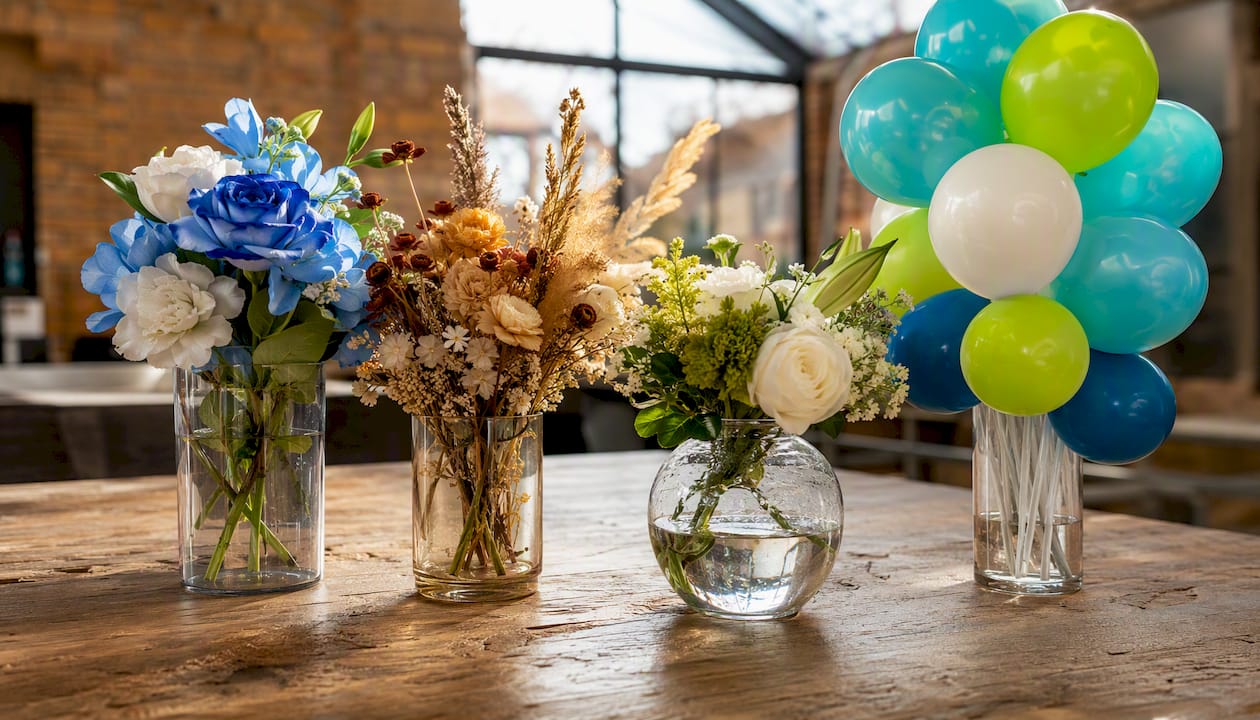
Candles bring their own checklist. Confirm your venue’s open-flame policy before ordering a single votive, since many venues restrict them entirely. Battery-operated flameless candles solve this without changing the look much.
Balloons need their own safety pass, too. Indoor clusters hold steady with a 4 to 6 ounce base weight, but outdoor setups need heavier anchors because of wind. Air-filled balloons also beat helium on sustainability, since there’s no gas to source or dispose of, and the balloons themselves can often be reused for a second event if stored flat.
Product Categories That Match Each Centerpiece Type
Once you’ve picked a style, the next step is sourcing it without piecing together a dozen separate orders. Usnovelty stocks the building blocks for most of the styles above as ready-to-assemble kits.
- Balloon centerpiece kits, like the mini cascade centerpiece, give you the base and cluster in one order.
- Pre-made multi-packs, such as the bamboo bash centerpiece set, work well for themed birthday or luau-style events.
- Votive and candle bundles cover candle-only or floating-candle setups without sourcing glassware separately.
- Garland and runner kits give long tables a finished look without custom floral work.
Order one kit per table for balloon clusters and multi-packs, but plan for one runner per 8 to 10 foot table if you’re going the garland route. Buy two or three extra units beyond your table count. A cracked vase or a deflated balloon on event morning is common, and having backups on hand beats a last-minute store run. Usnovelty ships free on orders over $75, which usually covers a full table’s worth of kits in one order.
What Party-Supply Sellers See Behind the Counter
Most centerpiece problems trace back to underestimating quantity, not picking the wrong style. Customers routinely order exactly enough balloon kits for their table count and nothing extra, then a balloon deflates the morning of the event and there’s no spare. The fix is simple: order one or two extra kits and a couple of spare weights, since balloon stands and vases that ship flat can tip in transit more often than people expect.
On the returns side, unopened kits are generally the easiest to handle if plans change before the event, so don’t wait until the week of to place your order.
Where to Buy Ready-Made Centerpiece Supplies
You don’t need to hire a florist or hand-build a garland to get a table that looks pulled together. Usnovelty stocks the exact product categories covered above, from balloon centerpiece kits to pre-made multi-packs to votive bundles, so you can match a style to your table count and check out the same day.
A few quick bundle rules make ordering painless: one compote or low arrangement per 60-inch round, one runner per 8 to 10 foot banquet table, and one balloon centerpiece kit for every two to four smaller tables if you’re spacing them out rather than covering every seat. The balloon mini cascade centerpiece works well as that anchor piece, and pairing it with a themed multi-pack like the bamboo bash centerpiece set rounds out a tablescape without extra sourcing.
Every product page lists assembly instructions and a photo of the finished kit, so you can confirm the scale matches your table before it ships. Orders over $75 ship free, and browsing the full party supplies catalog is the fastest way to see every centerpiece-ready category in one place. If you’re building out a full tablescape, the beverage napkins make an easy add-on that ties the small tabletop details together.
Sources
For more detail on sizing rules, venue matching, and material comparisons, these sources cover the specifics well:
- The wall of flowers mistake that kills conversation at dinner tables — Destination Weddings
- Wedding centerpiece styles: bud vases, compotes, tall arrangements & more — Poppy Flowers Help Center
- Fresh flower centerpieces guide — Fiore Designs
- Balloon centerpieces: DIY table decor ideas — Starry Sky Balloon
- Dried and preserved flower centerpieces — WeddingWire