

Festive decor works because it changes three things at once: how a room feels, what it signals about the people who live there, and how strangers or shoppers behave inside it. Lighting and color shift mood in seconds. Themed tableware and banners announce identity and occasion. Outdoor displays tell the whole street something about who you are.
Different products do different jobs, and knowing which is which saves you money and gets better results.
- Lighting sets the mood — string lights and LED candles shift a room’s emotional temperature faster than almost anything else.
- Themed tableware signals identity — the pattern on your plates tells guests what kind of party they walked into.
- Outdoor displays broadcast to the neighborhood — a decorated porch is a social signal, not just decoration.
Key Takeaways
Festive decor works by combining sensory atmosphere, social signaling, and behavioral cues into a single coordinated effect that shoppers and guests respond to instinctively.
| Point | Details |
|---|---|
| Lighting drives mood fastest | Warm string lights or LED candles shift emotional tone quicker than any other single decor choice. |
| Decor signals sociability | Decorated homes are rated more approachable by strangers, especially for less socially active homeowners. |
| Ambiance affects spending | Nearly half of shoppers change routines for stores with stronger festive atmosphere, per Mood Media’s survey. |
| Pair staples with accents | Reuse neutral base items and swap in seasonal accents to control cost without losing impact. |
| Usnovelty supplies both layers | Usnovelty’s balloons, banners, tableware, and lighting cover the full range of atmosphere and social-signal effects described here. |
Table of Contents
- How Do Decorations Create Atmosphere?
- What Do Decorations Say About the People Who Display Them?
- Does Festive Decor Actually Affect Customer Behavior?
- What Common Decorations Actually Mean
- How Should You Set Up Festive Decor Step by Step?
- What Does the Research Say About Decorating and Mood?
- A Publisher’s Note on Choosing Festive Decor
- Bring These Effects Into Your Own Celebration
- Sources
How Do Decorations Create Atmosphere?
Atmosphere isn’t magic. It’s a stack of sensory cues your brain processes almost instantly, before you consciously register a single decoration. Light, color, scent, sound, scale, and texture all combine to tell your nervous system whether a space is warm, exciting, calm, or celebratory.
Light does the heaviest lifting. Warm, low string lights read as intimate; bright overhead light reads as functional or clinical. Color follows close behind: reds and golds signal warmth and tradition, while pastels or metallics read as playful or modern. Scent and sound work more subtly but stick in memory longer, which is part of why a scented sachet or a themed playlist can define how a party gets remembered.
- Light → string lights, LED candles → intimacy, warmth
- Color → themed tableware, balloon palettes → tone and occasion
- Scent → scented sachets, candles → memory and mood
- Scale → balloon arches, banners → drama and focal point
- Texture → fabric backdrops, foil banners → visual richness
Pro Tip: Buy reusable, neutral base items (solid-color balloons, plain table linens) once, then swap in themed accents like a foil banner or specialty napkins for each event. You get a fresh atmosphere every time without rebuying the whole setup.
What Do Decorations Say About the People Who Display Them?
Strangers judge you by your porch. Research covered by Psychology Today found that people who decorate their homes for the holidays are rated by others as more sociable and approachable, and that effect is strongest for homeowners who otherwise keep to themselves. Decor becomes a stand-in invitation: it says “we’re open to connection” even when nobody actually knocks on the door.
- A lit porch or wreath signals welcome and approachability.
- A themed table setting signals effort and occasion, not just food.
- Yard displays act as a visible statement of identity and tradition.
A 1985 neighborhood study found that holiday decorating tends to spread block by block, and that cul-de-sac layouts in particular correlate with stronger neighborhood attachment and coordinated decorating.
That’s not a coincidence. Once one house decorates, neighbors often follow, turning individual choices into a shared neighborhood ritual.
Does Festive Decor Actually Affect Customer Behavior?
Yes, and the effect is measurable. Mood Media’s 2025 Holiday Consumer Survey found that 46% of shoppers change their routines specifically to visit stores with a stronger festive atmosphere, and three in four say music, visuals, and scent noticeably improve their shopping experience.
- Lighting and signage extend dwell time near entrances and displays.
- Music and scent raise emotional engagement and spontaneous spending.
- Tableware and eye-catching displays create shareable, photo-worthy moments that extend reach past the store itself.
For a full storefront or event façade, complex lighting rigs are worth renting professionally. For a shop counter, pop-up, or party space, retail products like banners, balloon arches, and scented accents get most of the effect at a fraction of the cost. Track it simply: note dwell time near your display, watch for a sales bump during the display window, and count social shares of your setup.
What Common Decorations Actually Mean
A handful of items do most of the symbolic work at any celebration, and recognizing what each one communicates helps you build a display on purpose instead of by accident.
- String lights — warmth, coziness, an invitation to linger.
- Wreaths — welcome, tradition, seasonal marker on a door.
- Balloon arches or clusters — celebration, milestone, “something special is happening here.”
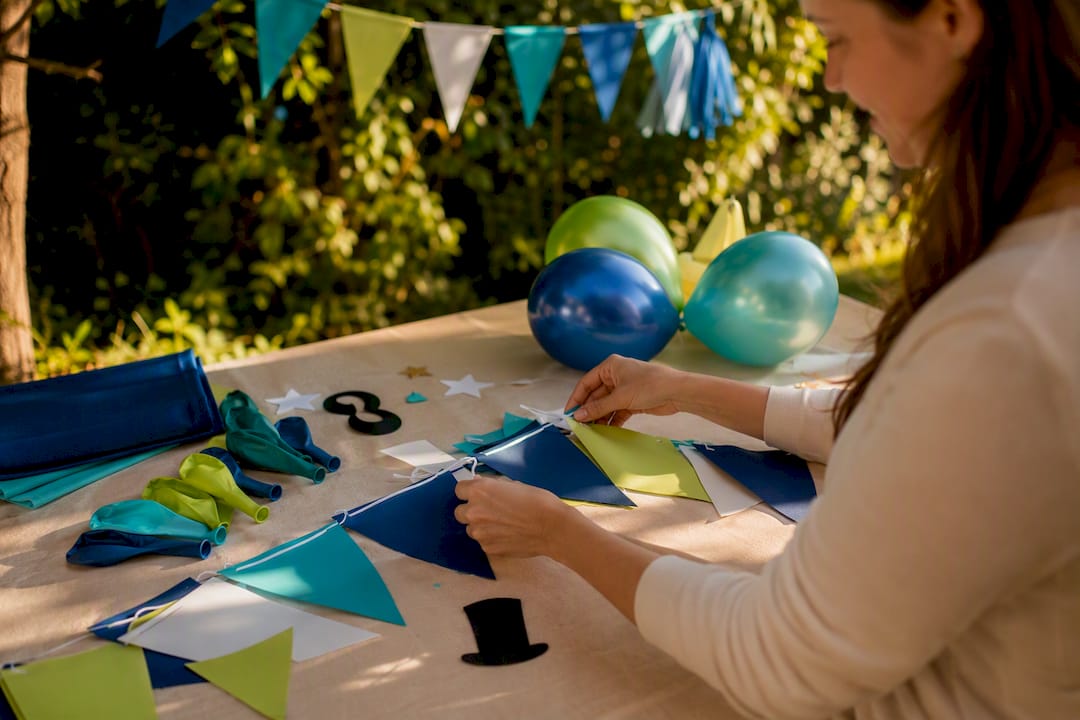
- Banners — direct announcement of occasion (birthday, graduation, holiday).
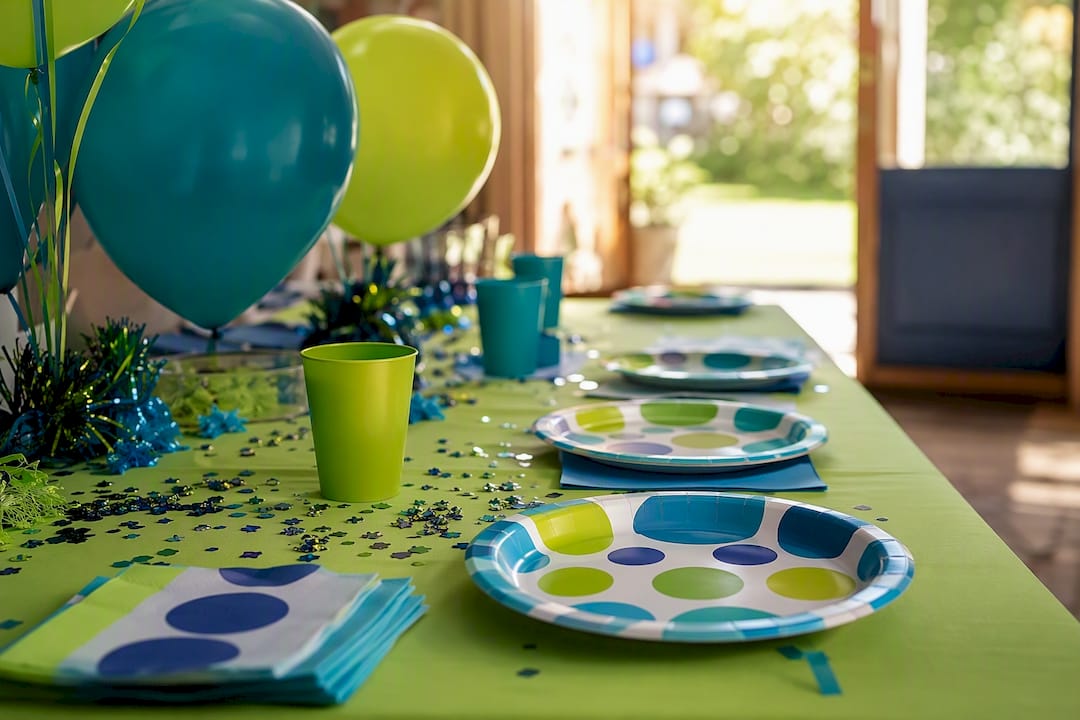
- Themed tableware — identity and taste, telling guests what kind of event they’re at before anyone speaks.
- Metallic or pastel accents — modern, playful tone versus traditional reds and golds.
Scale and repetition matter as much as the individual item. One balloon looks like an afterthought; a cluster or arch reads as a focal point. When mixing cultural or seasonal symbols, choose pieces that signal openness and respect rather than defaulting to one tradition by habit. A neutral, celebratory palette (balloons, string lights, solid tableware) works across almost any inclusive gathering.
How Should You Set Up Festive Decor Step by Step?
- Pick one focal point — a balloon arch, a banner wall, or a lit backdrop that draws the eye immediately.
- Choose a color palette — two to three colors max, tied to the occasion or theme.
- Layer lighting and texture — combine ambient light (string lights) with accent pieces (foil banners, fabric backdrops).
- Add themed accents last — tableware, balloon clusters, and small details that reinforce the palette without overwhelming it.
Dos:
- Test lighting at night before the event; daylight hides half the effect.
- Group decor items in odd numbers (three, five) for a more natural, intentional look.
Don’ts:
- Don’t overcrowd a single wall or table with competing focal points.
- Don’t mix cultural or religious symbols carelessly; intent matters.
Safety matters here too. Keep LED candles instead of open flame near fabric or paper decor, check that outdoor lights carry a weatherproof rating, and use proper balloon anchors and adhesive hooks rather than tape or tacks that damage walls.
Pro Tip: Anchor balloon arches at the base with weighted clips, not just string. Wind and foot traffic take down more balloon displays than anything else.
What Does the Research Say About Decorating and Mood?
The psychology behind festive decor isn’t guesswork. Psychology Today’s coverage documents the sociability effect; Amy Morin’s analysis connects decorating to nostalgia and mood regulation; Mood Media’s survey quantifies the retail impact; and NPR’s reporting ties decorating to lower anxiety and shared cheer.
- Decorated homes read as more sociable, especially for less socially active homeowners.
- Nostalgia triggered by decor functions as a mild, effective mood regulator.
- Sensory retail cues (light, scent, sound) measurably shift shopper behavior.
Therapists quoted by NPR describe decorating as a reliable way to soothe anxiety, noting that during the pandemic it worked partly by reminding people of shared traditions they could still access even when isolated.
A Publisher’s Note on Choosing Festive Decor
Usnovelty has spent decades supplying party decor, and one pattern holds up again and again: the atmosphere and social effects described here don’t require an expensive overhaul. Reusable staples paired with a few well-chosen themed accents get you most of the mood and meaning at a fraction of the cost and effort.
Bring These Effects Into Your Own Celebration
Every mechanism covered here maps to a specific product. Warm, intimate mood comes from lighting choices. Identity and theme come through in tableware like the Party On Celebration Beverage Napkins or Sparkling Candles Dinner Plates. Scale and focal-point drama come from a piece like the Painted Balloons 15’ Foil Banner or a Balloons Mini Cascade Centerpiece.
Usnovelty carries curated sets that pair reusable base pieces with high-impact seasonal accents, so you don’t have to guess which combination creates the effect you want. Orders over $75 ship free, which makes stacking a banner, a centerpiece, and coordinated tableware for one event more practical than buying pieces one at a time. If you’re planning a full room transformation, the step-by-step celebration decor guide walks through sequencing your purchases so lighting, table settings, and focal pieces land together instead of arriving as an afterthought.
Browse the full Usnovelty catalog and build your next setup around the specific mood or message you want your space to send.
Sources
- The Surprising Psychology of Holiday Decorations | Psychology Today
- How Sensory Design is Reshaping Seasonal Shopping | Mood Media
- Deck the halls: Research shows decorating can soothe anxiety and bring cheer | NPR
- Article Inferences about homeowners’ sociability: Impact of christmas decorations and other cues