

For most parties, transport helium balloons already inflated inside a ventilated transport bag, in a cool, shaded car, within an hour of the event. If you’re flying, skip inflation altogether and pack them flat. Two things ruin balloons in transit: heat and time. A hot trunk speeds up helium loss and can pop latex outright, and the Transportation Security Administration only clears uninflated balloons for carry-on and checked bags, with the final call left to the screening officer. Usnovelty has spent decades supplying party balloons and hearing exactly how they arrive damaged, so the fixes below come from patterns that repeat at pickup counters, not guesswork.
Before you load a single balloon, get these constraints straight:
- Heat is the enemy. A parked car can heat up quickly enough to pop latex balloons or shorten their float time significantly.
- Timing beats packaging. The shorter the gap between loading and arrival, the fewer problems you’ll have.
- TSA rules apply to inflated balloons in the cabin, not the flat kind. Pack accordingly if you’re boarding a plane.
Quick fact: the TSA lists “balloons (not inflated)” as an allowed item in both carry-on and checked luggage, but that clearance disappears the moment they’re filled with helium and you try to walk them through a checkpoint.
Key Takeaways
Transport plans succeed when they minimize total time balloons spend inflated and exposed to heat, not just when they use the right bag.
| Point | Details |
|---|---|
| Match method to travel mode | Drive with inflated balloons in a ventilated bag; fly with them packed flat per TSA guidance. |
| Load balloons last | Cut total exposure time in the car by loading balloons after everything else is packed. |
| Use a ventilated bag for bundles | Reduce tangling and scuffing on multi-balloon jobs with a bag designed for airflow, not compression. |
| Separate foil from latex | Keep Mylar surfaces away from latex bundles to prevent scratches and static cling. |
| Buy from Usnovelty and rent a tank | Pair a transport bag and weights with a same-day helium tank rental to cut inflated float time before the event. |
Table of Contents
- Quick Pre-Trip Checklist for Transporting Helium Balloons by Car
- Packing Multiple Inflated Balloons Without Tangling or Scuffing
- Why Heat in a Parked Car Damages Helium Balloons
- Flying With Balloons: What TSA Actually Allows
- Moving Balloon Arches, Garlands, and Large Clusters
- Safety Considerations Specific to Helium Balloon Transport
- What Happens to Transport Bags and Ribbon After the Party
- The Gap Between What Balloon Guides Promise and What Actually Works
- Get the Right Gear Before You Load the Car
- Sources
Quick Pre-Trip Checklist for Transporting Helium Balloons by Car
Get this sequence right and you’ll skip the two most common mistakes: loading too early and forgetting the small stuff that keeps balloons from tangling.
Decide inflated or uninflated first. If you’re driving under an hour to the event, inflate ahead of time. If you’re catching a flight or driving more than a few hours, wait and inflate on arrival, or arrange for local helium fill.
- Pack your gear the night before. You’ll want a ventilated transport bag or a clean fitted sheet, balloon weights, spare ribbon, clear tape, and a small pair of scissors for quick fixes.
- Prep the vehicle. Run the air conditioning for a few minutes before loading, and park in shade right up until departure, not just on arrival.
- Load last. Balloons should be the very last thing that goes into the car, after everything else is buckled in and the route is set.
- Secure everything. Tie bundles to weights or seatbelt anchors so balloons can’t roll, rub against upholstery, or pile onto sharp edges.
- Keep the ride short and cool. Set the thermostat to a comfortable, stable temperature and avoid stop-and-go detours that add time in a warm cabin.
Before you pull out of the driveway, run through this last check:
- Are all balloons tied off and weighted so nothing shifts under braking?
- Is the trunk or back seat free of anything sharp, like exposed screws on folded chairs or wire from centerpiece stands?
- Do you have a backup balloon or two in your inflated kit in case one pops en route?
- Is your phone charged in case you need to call ahead for a same-day helium top-off?
Skipping that last question is how organizers end up standing in a parking lot with three flat balloons and no plan.
Packing Multiple Inflated Balloons Without Tangling or Scuffing
Commercial ventilated transport bags exist for a reason: they reduce friction between balloons and let treated latex finish drying instead of trapping moisture against plastic film. A large ventilated transport bag is built to hold dozens of 11-inch balloons at once, and the mesh or vented panels stop the surface-to-surface rubbing that dulls shine and causes premature bursts. Retail listings for these bags confirm the sizing runs large specifically because bigger jobs need room, not compression.
Packing a batch properly comes down to a short sequence:
- Group by size. Keep similarly sized balloons together so smaller ones don’t get crushed by larger ones during the drive.
- Anchor weights first. Attach weights to each bundle before you move anything, so you’re never chasing a floating cluster while trying to load the car.
- Tie in small bundles, not one giant mass. Five or six balloons per bundle is easier to maneuver than forty balloons tied into a single knot.
- Slide bundles into the bag loosely. Never cram the bag shut. Compression is what causes rubbing, scuffing, and static cling between balloons.
Foil and Mylar balloons need different handling than latex. Mylar’s seams and printed surfaces scratch more easily, so keep them separated from latex bundles rather than mixing everything into one bag. Latex also tends to deflate faster than foil, with indoor float times often running 8 to 24 hours for latex versus 3 to 7 days for foil, which matters if you’re prepping a day ahead rather than the same morning.
Pro Tip: If you don’t own a transport bag, a clean fitted sheet works as a one-time substitute for a short drive. Lay balloons in the center, gather the corners loosely, and carry it like a hammock. It won’t protect against a multi-hour trip or repeated loading and unloading, but it beats loose balloons rolling around a trunk.
Why Heat in a Parked Car Damages Helium Balloons
Latex and foil both expand when they warm up, and a closed car in direct sun can climb well past outdoor temperature within minutes. That expansion is exactly what causes balloons to pop or lose their shape faster than they would in a shaded, temperature-stable space. Helium molecules are also small enough to migrate through latex walls faster as temperature rises, so a hot trunk doesn’t just risk a pop. It quietly shortens the whole float window.
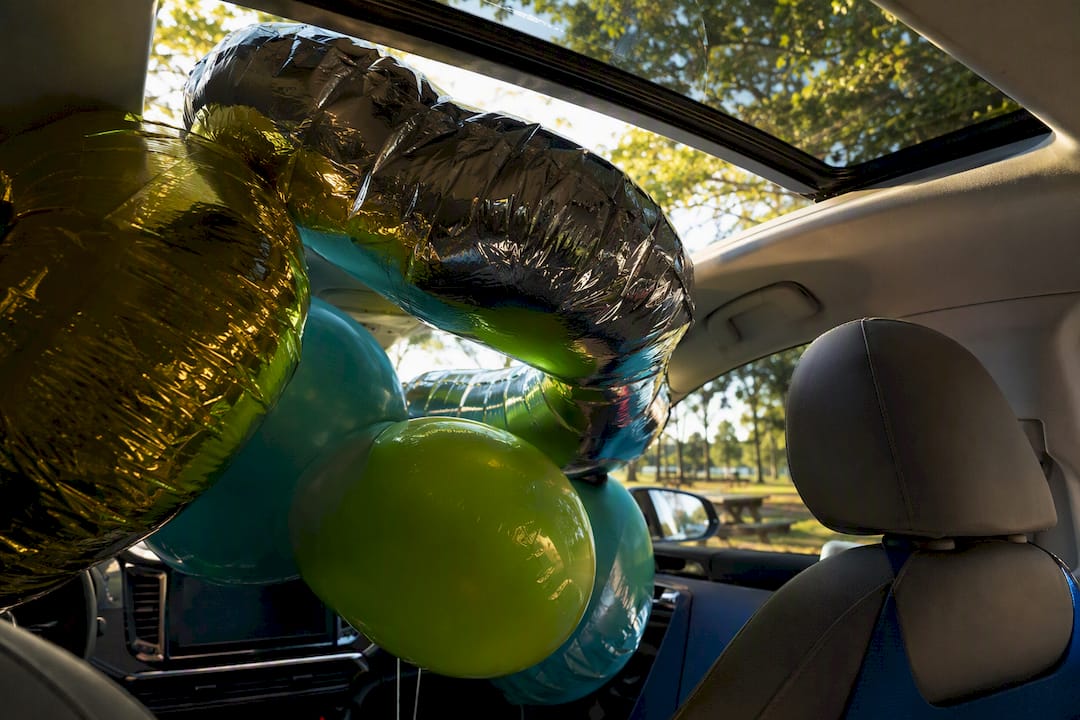
Placement matters as much as timing. Put balloons in the back seat rather than the trunk, where temperature swings faster and ventilation is worse. Secure bundles to the headrest or seatbelt buckle so they can’t drift into hot glass or rub against fabric during turns.
A few habits keep the temperature cycle in check:
- Run the A/C before loading, not after.
- Crack a window slightly if balloons will sit for more than a few minutes with the engine off.
- Avoid repeated hot-to-cool-to-hot cycles. Getting in and out of the car for multiple errands does more damage than one steady drive.
- If a balloon does pop, cut it loose immediately so the deflated latex doesn’t tangle with or scuff its neighbors.
Practitioners who move balloons for a living treat temperature stability as the single biggest lever they control, since everything else (weights, bags, ribbon) is just damage control once heat has already done its work.
Flying With Balloons: What TSA Actually Allows
“Balloons (not inflated)” appear on the TSA’s own list of items permitted in both carry-on and checked baggage, but the agency is explicit that screening officers make the final call on anything presented at the checkpoint.
That single sentence should shape your entire air-travel plan. TSA guidance covers uninflated balloons. It says nothing that guarantees an inflated latex bundle sails through a checkpoint or survives a pressurized cargo hold. Cabin pressure changes and temperature swings in the hold both work against a filled balloon, so the safest workflow for flying is to pack flat and inflate after landing.
Three practical paths work for event organizers flying to a job:
- Ship uninflated and inflate locally. Pack balloons flat in your checked bag and find a helium source near your destination.
- Buy locally instead of transporting at all. If you’re traveling for a one-off event, ordering supplies to arrive at your destination often costs less hassle than babysitting balloons through security.
- Book delivery through a local vendor. Some markets have dedicated delivery services that handle inflation and drop-off on the event date, which removes the entire transport question. One regional guide to event balloon delivery walks through how that kind of vendor-managed workflow typically runs.
Whichever route you pick, decide before you pack your suitcase. Trying to improvise a flat-pack solution at the airport, after you’ve already inflated forty balloons, is how organizers end up leaving product behind at security.
Moving Balloon Arches, Garlands, and Large Clusters
Big installations raise a different question: do you build on-site, or move a finished piece? For anything wider than your car door frame, most of the failure risk is mechanical: tangling, scuffing against door frames, or a frame shifting mid-drive, rather than helium loss.
- Decide disassembly early. Arches and garlands over 6 feet usually travel better broken into sections and reassembled on-site than moved fully built.
- Size the vehicle to the piece, not the other way around. A minivan or cargo van beats a sedan for anything larger than a tabletop centerpiece like a mini cascade centerpiece.
- Pad every contact point. Wrap frame joints and any exposed metal or PVC with soft cloth so nothing scrapes balloon surfaces during loading.
- Load frames flat and balloons upright. Keep structural pieces on the vehicle floor and balloon clusters higher up, away from anything that could puncture them.
- Pack a repair kit. Bring extra clips, a hand pump, tape, and a handful of spare balloons in matching colors for on-site touch-ups.
Pro Tip: Schedule delivery windows that shrink the time your cluster spends in a vehicle, and stage final inflation on-site whenever the venue allows it. Less time riding in a car means less scuffing and fewer surprises when you unload.
Safety Considerations Specific to Helium Balloon Transport
Helium itself is inert and non-toxic, but a car full of pressurized latex still carries a few real risks worth planning around. A balloon that pops unexpectedly near the driver’s face while merging onto a highway is a genuine distraction, so keep bundles secured behind the front seats, never floating loose near the dashboard or rearview mirror.
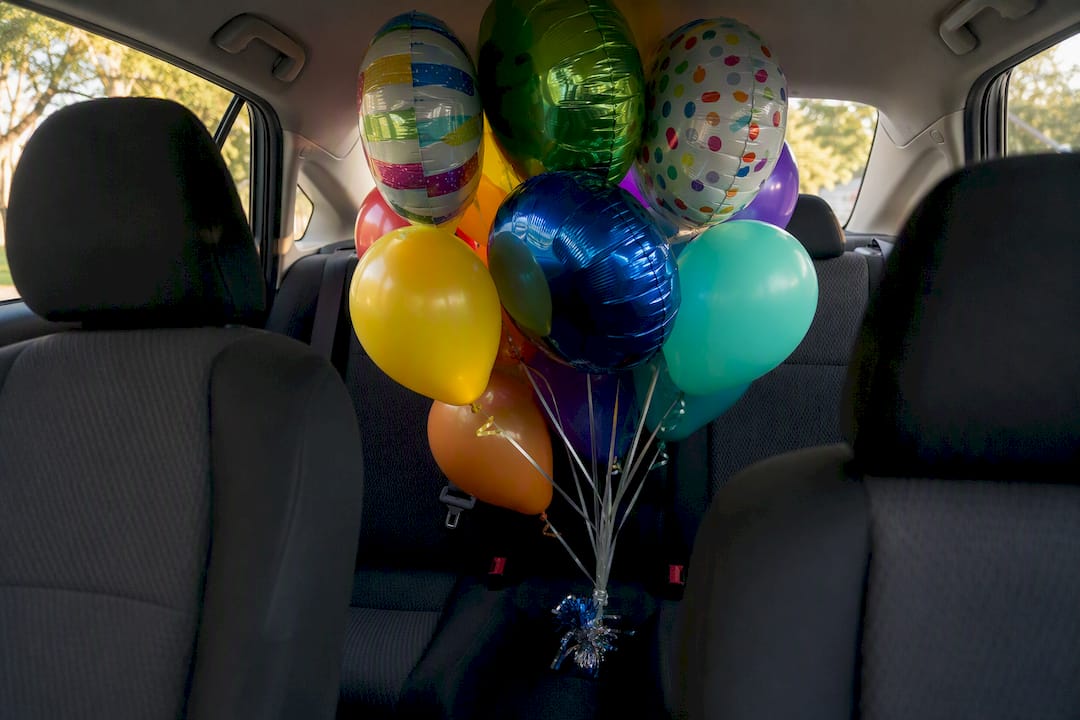
Foil balloons carry a separate concern: the metallic coating conducts electricity. Keep Mylar balloons away from overhead power lines when loading or unloading outdoors, and never let a foil bouquet drift near an open garage door opener or exposed wiring.
Children riding along with a car full of balloons need supervision, too. Latex fragments from a popped balloon are a choking hazard for toddlers, so if a balloon bursts mid-drive, pull over when safe and clear the debris before continuing.
Weighted bases matter beyond keeping balloons from floating away. A cluster without adequate weight can obstruct rear visibility or shift suddenly under hard braking, turning a decor problem into a driving hazard. Keep total balloon weight and placement in mind the same way you would any other unsecured cargo, and never stack anything on top of a balloon bundle that could puncture it if the car stops short.
What Happens to Transport Bags and Ribbon After the Party
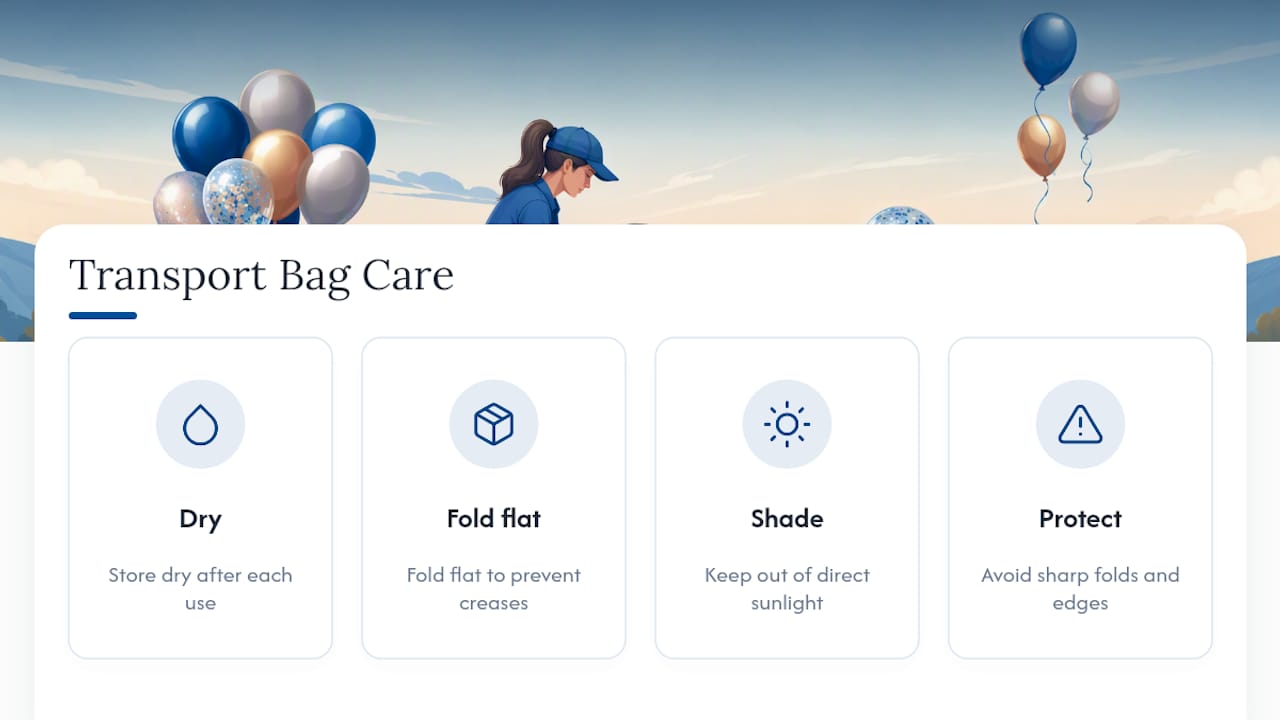
Ventilated transport bags are reusable for dozens of events if you store them dry and away from sharp folds, which makes them a better long-term buy than a one-time-use plastic sleeve. Fold them flat, keep them out of direct sunlight, and they’ll outlast several seasons of party runs.
Latex balloons themselves are biodegradable over time under the right conditions, unlike Mylar, which doesn’t break down the same way and belongs in general waste or a foil-recycling stream where your municipality offers one. Ribbon, tape, and any plastic clips from a transport kit are the pieces most likely to end up in a landfill unnecessarily, so save usable lengths of ribbon and reusable clips for the next event rather than tossing them with the deflated balloons.
If you’re running events regularly, standardizing on a single reusable transport bag and a small bin of reusable weights and clips cuts down on the disposable footprint of every trip, and it saves you from rebuying the same small supplies before every party.
The Gap Between What Balloon Guides Promise and What Actually Works
Most transport advice online treats balloons like static objects: wrap them, load them, done. That misses the part that actually causes damage, which is time. Every extra thirty minutes a balloon spends in a warm car or a cramped bag compounds the risk, whether that risk is a pop, a scuff, or a few hours of lost float time you won’t notice until the guest of honor arrives and half the arch has drooped.
The conventional advice to “keep balloons out of direct sun” is true but incomplete. The bigger lever is total time in transit, not just temperature at any single moment. A balloon that spends fifteen minutes in a hot car survives better than one that spends ninety minutes in a mildly warm one. Plan your loading sequence around minimizing total exposure time, not just avoiding the worst heat of the day.
If there’s one priority to fix first, it’s this: stop treating transport as an afterthought squeezed in after everything else is packed. Balloons should be the last thing loaded and the first thing unloaded, every single time, regardless of what bag or sheet you’re using to protect them.
— Jared
Get the Right Gear Before You Load the Car
Usnovelty is the practical stop for the exact supplies this guide keeps pointing to, not a general party blog telling you to “be careful.” You need a ventilated transport bag, a set of balloon weights, and depending on your event, a helium tank rental to inflate on-site rather than hours in advance.

The fastest path for most small event organizers: buy a transport bag and a pack of weights together, then reserve a helium tank rental for the morning of the event so balloons spend less total time inflated and in transit. That single change (inflating closer to the event) solves more of the heat and float-time problems covered above than any bag or sheet ever will. Pair your weights with a foil piece like the 24" Birthday Burst Helium Shape for a display that survives the drive intact.
Start at the Usnovelty shop to check tank rental availability for your event date and add a transport bag to your order before you check out.
Sources
- Balloons (not inflated) | Transportation Security Administration
- Can Helium Balloons Stay in a Hot Car? – Balloonee - USA
- Hi-Float Giant Transport Bag | Large Ventilated Balloon Bag | PS Helium & Balloons