

The formula is simple: table diameter plus twice your desired drop equals the tablecloth diameter you need. Want a floor-length look on a standard 60" table? Add 60 inches of drop (30 inches on each side) and you land on a 120" round cloth. For most events, a 60" round table is the workhorse size, and a 90" cloth (lap-length drop) is the pick that works for nearly any occasion.
TL;DR:
- Most standard 60-inch round tables require a 120-inch tablecloth to achieve a full floor-length drop, assuming a 30-inch height.
- For a casual or general event, a 90-inch round cloth on a 60-inch table provides a neat lap-length drop suitable for many occasions.
- Using fitted spandex covers is recommended for high-top or nonstandard tables, as flat cloths often don’t size correctly and may slip or pool.
- Chairs, setup space, and walking paths must be considered, especially for longer drops, to prevent obstruction or tripping hazards.
- Buying one size larger than measured and having a spare cloth on hand can prevent sizing mishaps during your event.
Table of Contents
- What Size Tablecloth for a Round Table? Measuring and Calculating
- Round Tablecloth Size Chart for Standard Table Diameters
- Drop Styles Explained and How to Choose One for Your Event
- Which Round Table Size Fits Your Event Best?
- Fixing Common Sizing Mistakes Before They Ruin Your Setup
- Why Trust These Round Tablecloth Sizing Recommendations
- Fast Sizing Heuristics from the Floor
- Shop Round Tablecovers Sized Right for Your Event
- Sources
What Size Tablecloth for a Round Table? Measuring and Calculating
Start by measuring your table’s diameter, not the radius. Run a tape measure across the table’s widest point, straight through the center, edge to edge. Round up to the nearest inch if you land between measurements.
Once you have that number, apply the sizing formula: table diameter + (2 × drop) = tablecloth diameter. You double the drop because fabric hangs off both sides of the table, not just one.
Here’s how that plays out on common tables:
- A 36" table with an 8" casual drop needs a 52" cloth (36 + 16).
- A 48" table with a 15" lap-length drop needs a 78" cloth (48 + 30).
- A 60" table with a full 30" floor drop needs a 120" cloth (60 + 60).
One catch: that formula assumes a standard 30" table height. A 42" cocktail or high-top table needs extra drop length to reach the same visual point, and standard cloths are cut with 30" tables in mind. For those, a fitted spandex cover built for the exact height solves the mismatch better than a bigger flat cloth.
Round Tablecloth Size Chart for Standard Table Diameters
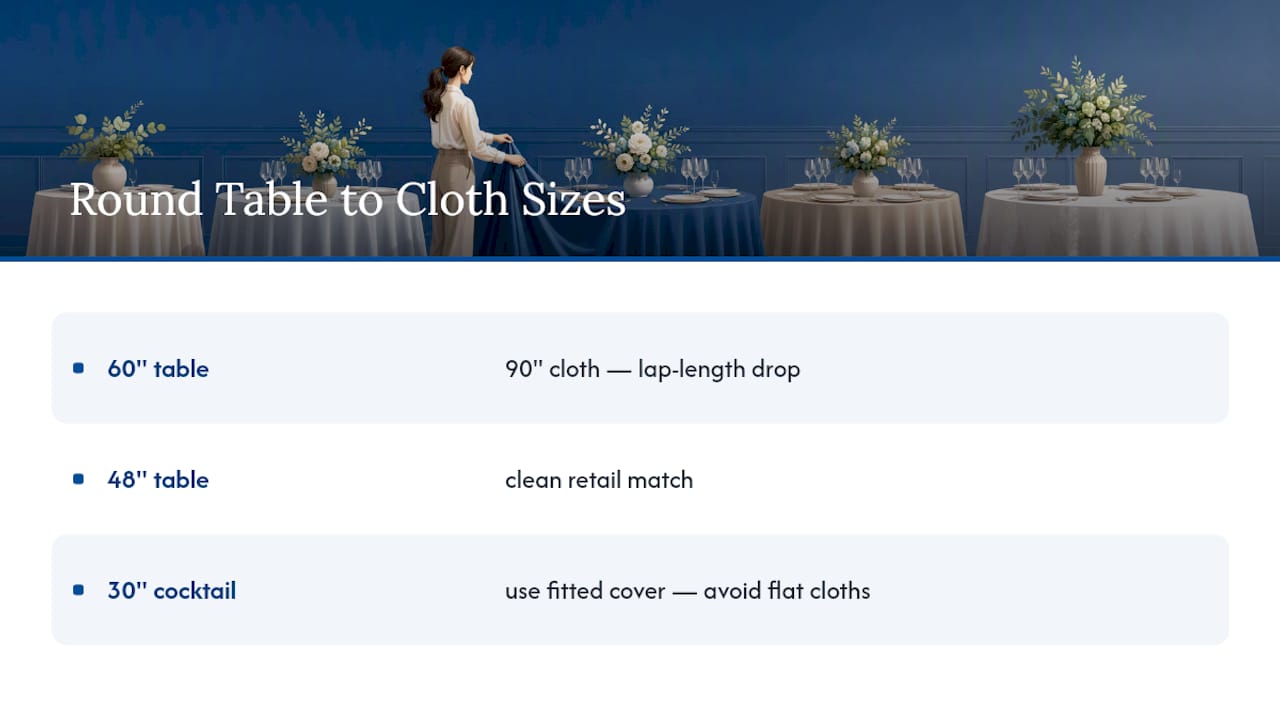
Once you know your table’s diameter, matching it to a retail cloth size takes seconds. Common retail sizing runs like this for the diameters you’ll actually encounter:
The 60" and 48" rows are where most party planning happens, and it’s not a coincidence those are the sizes with the cleanest retail matches. A 60" table paired with a 90" round cloth gives you a lap-length drop that looks intentional without pooling on the floor. If you’re setting up 30" cocktail rounds, skip the flat-cloth math entirely. A fitted cover is the better call, since flat cloths on tall narrow tables tend to slide or bunch at the base.
Drop Styles Explained and How to Choose One for Your Event
Drop length is the distance the fabric hangs past the tabletop edge, and it does more than change the look. It changes whether chairs slide in, whether guests can cross their legs, and whether your setup reads casual or formal.
Vendors generally group drop into three categories:
- Casual (6"–8" drop): Everyday dinners, backyard parties, buffet tables where guests need to move freely.
- Lap or standard (12"–15" drop): The most common choice for seated dinners and showers, since it covers laps without dragging on shoes.
- Formal or floor-length (28"–30" drop): Weddings, galas, and head tables, where the cloth skims the floor for a finished look.
- Puddle (over 30"): Fabric pools slightly on the floor. It reads dramatic in photos but gets dirty fast and creates a tripping hazard near foot traffic.
Before you commit to a drop length, check three things: whether chairs can still slide out, whether anything needs to be stored under the table, and whether the drop crosses a walking path. Shorter drops leave more legroom; longer ones look formal but raise trip risk.
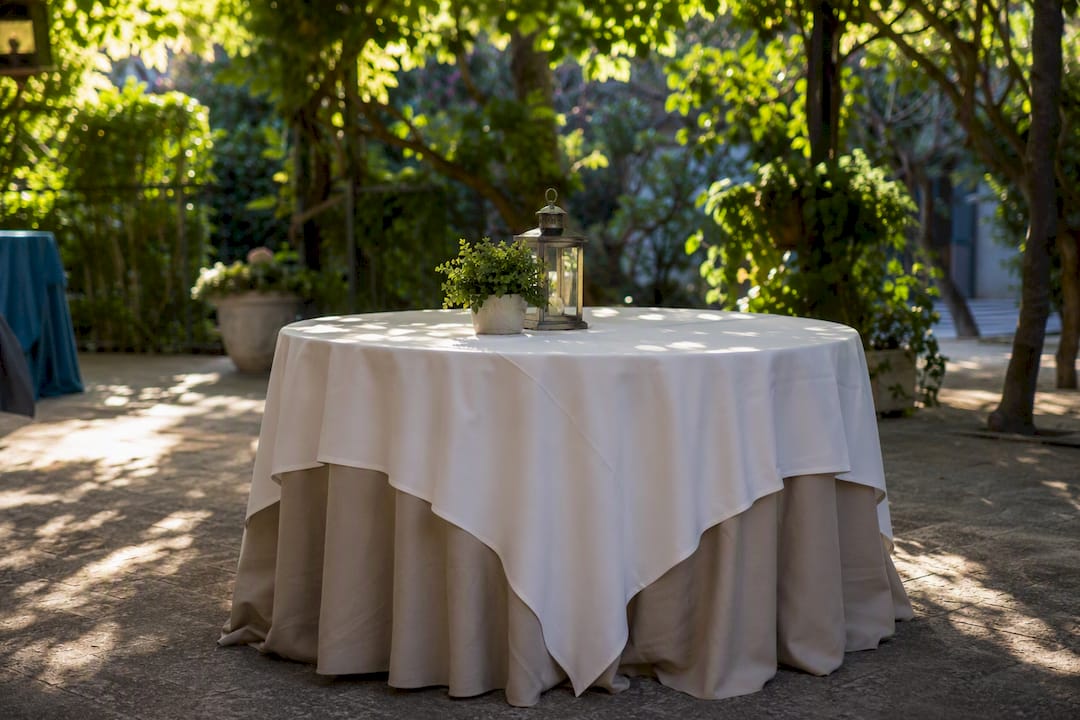
Pro Tip: If you love the floor-length look but worry about pooling, layer a shorter overlay on top of a full-length cloth instead of sizing up the base linen. You get the formal drape at the bottom with a crisp accent on top, and cleanup is easier because the overlay comes off first.
Which Round Table Size Fits Your Event Best?
Table diameter decides more than seating math. It decides how loud the room feels and how much you spend on linens and centerpieces.
A 60" round seats 8 comfortably and remains the default choice for weddings and most seated events, largely because it balances sight lines, conversation distance, and linen cost better than the alternatives. Here’s where the other sizes earn their place:
- 48" rounds work well for sweetheart tables, kids’ tables, or intimate groups of 4 to 6 where you want guests close enough to talk without raising their voices.
- 72" rounds seat 10, which means fewer tables overall. Fewer tables means fewer tablecloths and centerpieces to buy, a real cost saver at large guest counts. The trade-off is that guests across the table sit far enough apart that cross-table conversation gets difficult.
- Mixed floor plans solve uneven group sizes. Pairing 48", 60", and 72" rounds in the same room lets you seat odd-numbered friend groups without empty chairs, as long as your linens and centerpieces match in color and style so the room still reads as one cohesive event.
If you’re planning a loud reception with a band or dance floor, lean toward more 60" tables over fewer 72" tables. The extra distance on a 72" round already strains conversation, and ambient noise makes it worse.
Fixing Common Sizing Mistakes Before They Ruin Your Setup
Even with the formula in hand, a few situations trip people up. Here’s how to handle them:
- Cloth puddles on the floor: Re-measure your table height first. Most flat cloths assume a 30" table; if yours is shorter, the same cloth will pool. Either size down or switch to a fitted cover.
- Cloth looks too short: You likely measured the radius instead of the diameter, or underestimated your drop. Size up to the next retail option, or add a matching overlay to extend the visual drop without buying a new base cloth.
- Cocktail or high-top tables never fit right: Standard 30"-height math doesn’t apply. Order a fitted spandex cover cut for 42" tables instead of chasing the right flat-cloth size.
- Odd or nonstandard diameters (e.g., 42" round dining tables): Round up to the next common size and accept slightly more drop, or go custom if the fit needs to be exact.
When flat cloths keep fighting you, fitted covers remove the guesswork. They’re cut to a specific table height and diameter, so there’s no drop math involved at all.
Why Trust These Round Tablecloth Sizing Recommendations
Usnovelty has been supplying party goods since 1922, which means these sizing guidelines come from a business that has watched linen trends and table standards shift for a full century. That kind of tenure gives a retailer a practical sense of which sizes actually move and which ones sit on shelves.
For most home parties and casual gatherings, a round plastic tablecover is the fastest, most affordable fix. It wipes clean, costs little, and works for any drop length once you’ve done the math above. For dinner parties, showers, or events where appearance matters more, a fabric-backed vinyl cover holds its shape better and doesn’t slide the way lightweight plastic can.
A few buying habits worth adopting:
- Buy one size up if you’re between measurements. A slightly longer drop looks intentional; a short one looks like a mistake.
- Order at least one spare cloth per table style. Spills happen, and swapping a stained cloth mid-event beats leaving it.
- Reach for fitted spandex on any table taller than standard dining height.
Fast Sizing Heuristics from the Floor
When I’m walking a venue before an event, I don’t run the full formula on every table. I default to 60" rounds unless something in the room argues against it. A cramped space or a room built for quiet conversation pushes me toward 48" tables instead. A tight budget with a big guest list pushes me toward 72" rounds, knowing I’m trading some conversation ease for fewer linens to buy.
On site, I do three checks: pull a chair out fully to confirm the drop doesn’t block it, set a mock centerpiece to see how it reads against the cloth, guided by advice on weddings and events centerpieces, and walk the main aisle to make sure no drop length creates a trip risk. And I always order one extra cloth per table style. Spills don’t wait for a convenient moment.
— Jared
Shop Round Tablecovers Sized Right for Your Event
Once you know the number, matching it to a real product is the easy part. Usnovelty stocks the sizes and styles this guide walks through, so you’re not left comparing vague listings against your own math.

For casual parties and one-time events, a disposable option like the Festive Green Round Plastic Tablecover or the Lavender Round Plastic Tablecover covers your table at a fraction of the cost of fabric, in colors that match your theme instead of forcing you to build a theme around white linen. If you want something with more durability for a dinner party or a reception that runs long, a fabric-backed vinyl tablecover holds its shape through the night and wipes clean afterward. Round out the table with matching napkins, like the Party On Celebration Beverage Napkins, so the whole setting looks planned rather than pieced together.
Measure your table, run the formula above, and head to Usnovelty to check sizing against real product listings before you order.
Sources
- Round Tablecloth Size Guide with Chart & Calculator | MVP Visuals
- 60 vs 72 vs 48 inch round tables guide
- Complete Tablecloth Size Guide - CV Linens™
- Tablecloth Size Guide | Sur La Table – Lid & Ladle