

Do not put an empty helium tank in curbside trash or recycling. Confirm the tank is fully empty, then take it to an approved drop-off, a scrap metal yard, or a welding supply store that accepts pressurized cylinders. Before you cut, puncture, or hammer anything, check your county’s Solid Waste Authority page for local rules, since requirements differ from one county to the next.
TL;DR:
- Confirm the helium tank is fully empty by opening the valve until the hissing stops before transport or disposal.
- Take the tank to an approved drop-off location such as a scrap metal yard, welding supply store, or county hazardous waste event, after verifying their requirements.
- Ask whether disposable tanks need the valve removed or the tank punctured, and whether there are any associated fees or proof of residence needed.
- Avoid curbside pickup for helium tanks, as municipal programs and waste facilities generally prohibit them due to safety risks.
- Follow your specific county’s disposal rules, because procedures and acceptance vary widely across different jurisdictions and states.
Table of Contents
- How to confirm a helium tank is empty and prep it for transport
- Where to take an empty helium tank in the U.S.
- What it costs and how long drop-off takes
- Safety and legal notes before you handle a tank yourself
- How Usnovelty helps you handle tanks the right way
- Where to check the exact rules for your address
- The part most disposal guides get wrong
- Sources
How to confirm a helium tank is empty and prep it for transport
A disposable helium tank looks harmless once the balloons are gone, but there’s almost always residual pressure trapped inside. That pressure is exactly why curbside crews and compactors treat these tanks as a hazard, not scrap metal.
Here’s how to render it safe before you go anywhere:
- Put on gloves and safety glasses. An adjustable wrench helps too, in case the nozzle is stuck.
- Open the valve all the way and leave it open. Listen closely until the hissing stops completely. If you hear nothing, the tank is probably already empty.
- Remove the nozzle if the manufacturer says to. Balloon Time’s disposal instructions walk through unscrewing the nozzle and white retaining nut on their tanks, step by step, with video.
- Skip puncturing unless a recycler specifically asks for it. Some scrap yards want the valve removed or the tank punctured so they can verify it’s truly empty before they’ll take it, according to Logan County Solid Waste District. If nobody’s asked, don’t do it.
- Write “EMPTY” on the tank with a permanent marker once you’ve confirmed the hissing has stopped. This one step saves you an awkward conversation at the drop-off counter.
Pro Tip: Open the valve outdoors or in a garage with the door open. It’s not dangerous, but the sudden burst of gas can startle you if you’re standing right over it.
That’s really the whole procedure. It takes ten minutes, and it’s the difference between a tank a recycler will take and one that gets rejected on the spot.
Where to take an empty helium tank in the U.S.
Municipal pages are inconsistent about this, and that inconsistency trips up a lot of people. Plenty of county sites say “not accepted” for household hazardous waste collection, then quietly list the private businesses down the street that will take the tank anyway. King County, Washington is a good example. Read the whole page, not just the headline.
Your realistic options:
- County HHW programs. Some run special collection events for pressurized items even when the regular drop-off site won’t take them. Check your county’s schedule directly.
- Scrap metal yards. Many accept empty steel or aluminum cylinders and may pay a small rebate depending on metal prices that week.
- Welding supply stores. These businesses handle pressurized cylinders daily and often take disposable tanks off your hands, sometimes for a small fee.
- Industrial gas suppliers. Some accept refillable cylinders through exchange programs but won’t touch retail disposable units. Ask before you drive over.
- Retailer take-back programs. A handful of stores accept refillable tanks but not the disposable kind most party hosts buy. Call first.
When you call any of these, ask four things: do they take disposable retail tanks (not just refillables), do they require the valve removed or the tank punctured, is there a fee, and do they need proof of residence. Montgomery County, Pennsylvania’s recycling guide is a solid model for the kind of detail you’re looking for on your own county’s site.
What it costs and how long drop-off takes
Budget more patience than money. Private recyclers set their own terms, and the outcome depends on local scrap prices and each yard’s policy.
- Fees vary by business. Some charge a couple of dollars per tank; others take them free since steel has resale value.
- Rebates aren’t guaranteed. A yard might pay you a small amount for the metal, or it might not, depending on demand that week.
- Municipal events are usually free but often run on a limited schedule, sometimes by appointment only.
- Scrap yards are typically walk-in, while HHW events may require you to book a slot in advance.
Call ahead every time. Confirming acceptance and requirements before you drive over beats finding a locked gate.
Safety and legal notes before you handle a tank yourself
Even a tank that seems empty can hold enough residual pressure to rupture under the crushing force of a garbage truck’s compactor, which is exactly why Houston Solid Waste and most municipal programs bar them from curbside pickup entirely. That’s a real risk to the people doing the collecting, not a theoretical one.
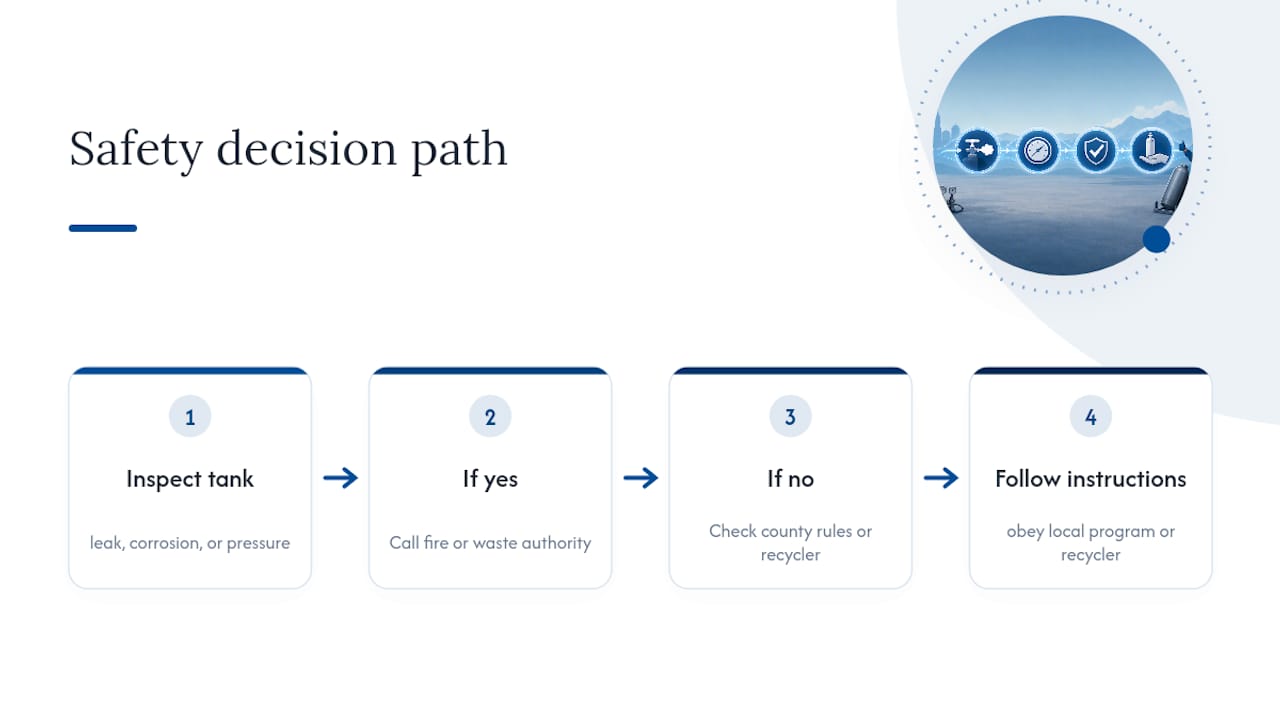
Don’t drop, hammer, or cut a tank unless a recycler has explicitly told you to and given instructions for how. If a tank is corroded, leaking, or you suspect it’s still pressurized, stop and call your local fire department or solid waste authority instead of improvising. And don’t trust a generic method you saw online over your own county’s page. Rules genuinely differ by jurisdiction, and following Houston’s process in a county with different requirements can get your tank rejected or worse.
How Usnovelty helps you handle tanks the right way
Usnovelty has sold balloon supplies for over a century and knows the tank lifecycle from checkout to disposal. If you rented a tank through Usnovelty, follow the rental return policy and contact customer service for location-specific pickup or drop-off steps rather than guessing. And if you’d rather skip the whole disposal question next time, air-filled decorations and balloon weights get you a similar look with zero tank required.
Where to check the exact rules for your address
Search your county Solid Waste Authority site for “helium tank” or “cylinder disposal” before you do anything else. Manufacturer pages like Balloon Time’s how-to guide cover the mechanics well, but your county’s page has the final word on where it actually gets accepted.
The part most disposal guides get wrong
Most advice on this topic treats helium tank disposal like a single national rule, and that’s the biggest disservice to readers. It isn’t one rule. It’s fifty states and thousands of counties, each with its own HHW program, its own list of approved private recyclers, and its own tolerance for puncturing versus valve removal. The generic five-step checklists floating around the internet skip that entirely, and that’s how people end up driving to a scrap yard that turns them away at the door.
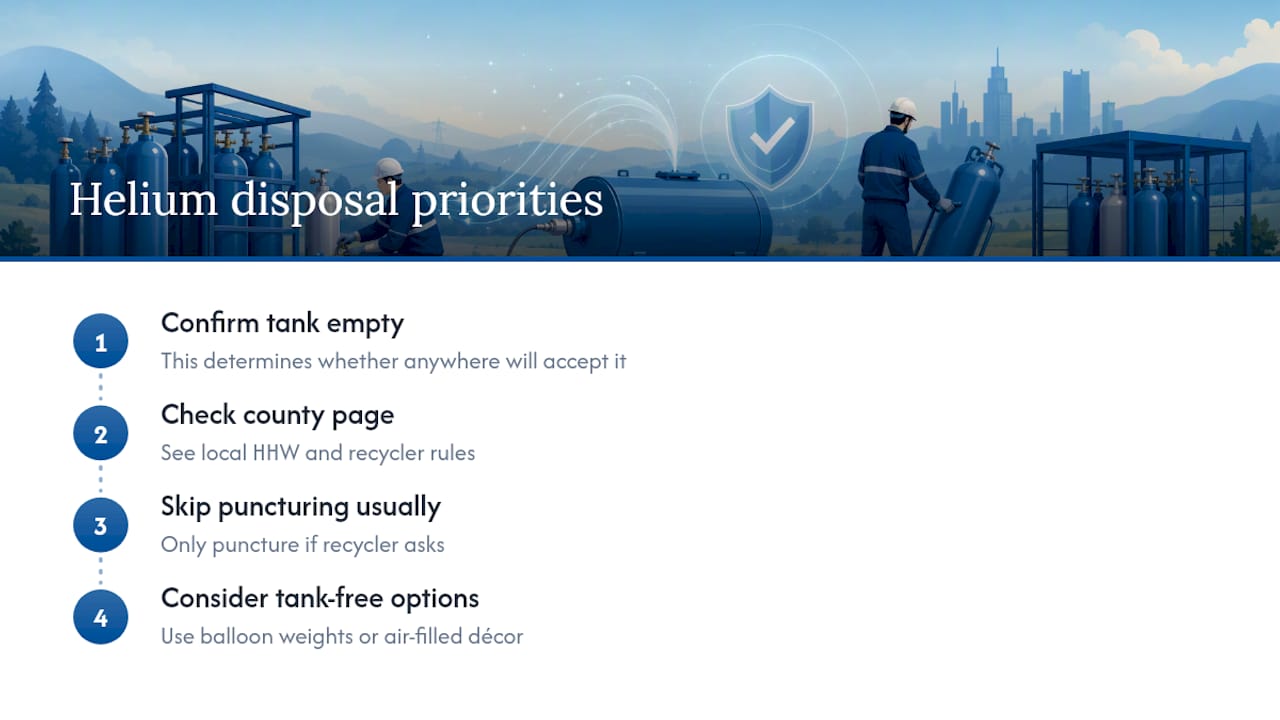
What actually matters, in order: confirm the tank is empty first, because that single step determines whether anywhere will take it. Then check your specific county page, not a national blog post, because Houston’s rules and King County’s rules aren’t the same. Puncturing gets overrated as a required step. Most tanks don’t need it. Skip it unless a recycler asks. If you’re the kind of person who buys a tank once a year for a kid’s birthday, the smartest move might be avoiding the tank altogether next time and reaching for balloon weights or air-filled decor instead.
— Jared
Ready for your next celebration without the tank headache? Browse Usnovelty’s party supplies for balloon weights, banners, and tableware that skip the helium logistics entirely, or check the transport guide for helium balloons if you’re moving inflated balloons across town this weekend.
Sources
- Disposable Helium Tanks — City of Houston Solid Waste
- Helium Tanks — Montgomery County, PA recycling guide
- Recycling helium tanks — Logan County Solid Waste District
- How to use — Balloon Time (disposal instructions)