

Gold tableware covers any dinnerware or flatware that carries a gold-colored finish, gold plating, or 24k gold accent work. The category runs from affordable gold-toned stainless steel sets to porcelain plates edged with genuine gold, and the appeal is straightforward: gold adds warmth, signals celebration, and turns an ordinary table into something worth photographing. Makers like Rosenthal, Hermes, and Gorham have built reputations around exactly this effect.
A few things to know before you shop:
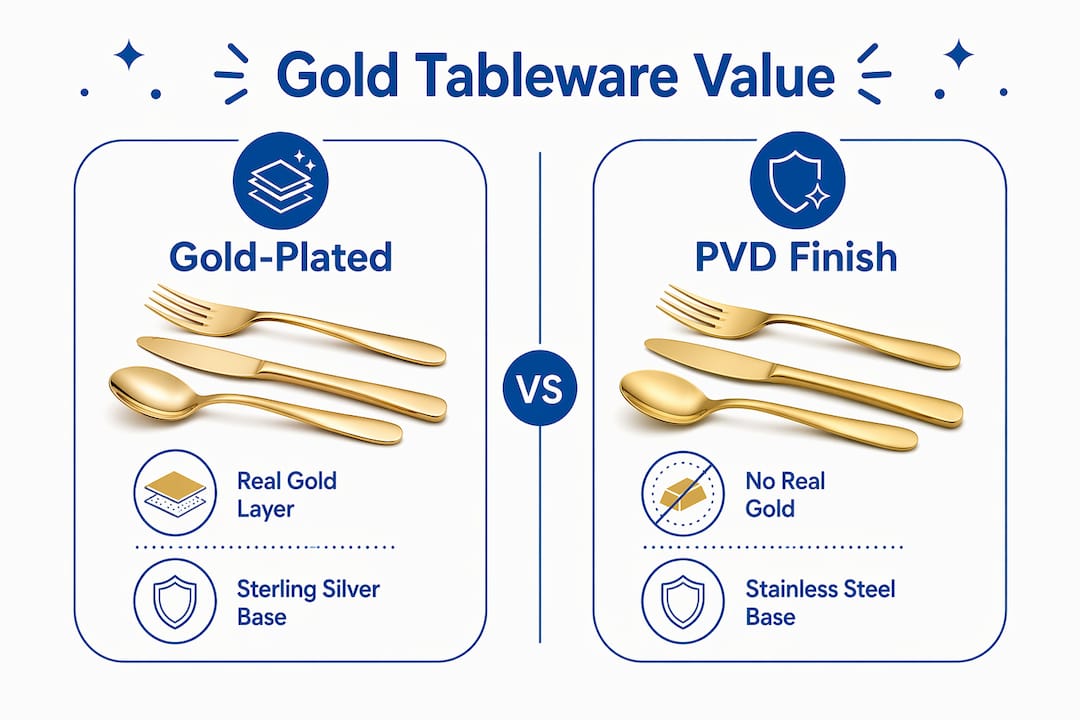
- Gold-toned stainless steel uses PVD or electroplating to create the color; no actual gold is present for recycling purposes.
- Gold-plated flatware bonds a real gold layer over a base metal, typically stainless steel or sterling silver.
- 24k gold accent dinnerware (Rosenthal, Augarten) applies genuine gold to porcelain rims or patterns.
- Solid gold tableware exists but is rare, impractically soft, and priced far beyond everyday use.
What styles and materials define gold tableware?
Gold tableware splits into a few clear categories once you know what to look for, and the finish you choose shapes both the look and the upkeep.
Gold-toned stainless steel is the most common option on the market today. The gold color comes from a PVD (physical vapor deposition) or electroplating process applied over an 18/10 or 18/8 stainless steel core. No actual gold is present, but the result is durable, consistent, and affordable. It works for everyday dining and large event setups alike.
Gold-plated flatware bonds a genuine gold layer over a base metal. The base matters: sterling silver underneath adds intrinsic metal value, while stainless steel keeps costing lower. Hallmarks like “14K GP” or “24K” stamped on each piece confirm the plating grade. Makers like Reed & Barton and Gorham built their reputations on precisely this category.
Porcelain and bone china with gold accents sit at the luxury end. Rosenthal, Augarten, and Hermes produce plates and serving pieces where gold is applied to rims, borders, or painted motifs. Annieglass takes a different approach, using 24k gold accents on handcrafted glass pieces.
- Polished gold is bright and formal, pairing well with white bone china and candlelit settings.
- Matte/champagne gold reads softer and more contemporary, and hides fingerprints better than polished finishes.
- Hammered gold adds texture that catches light at multiple angles, popular in artisan flatware lines.
Pro Tip: If you plan to use your gold flatware regularly rather than just for special occasions, go matte. Champagne gold shows far fewer water spots and fingerprints between uses, which means less polishing and more time at the table.
How much does quality gold tableware actually cost?
Price in this category tracks three things: whether real gold is present, how thick that layer is, and who made it.
Consumer gold tableware almost never contains solid gold. The metal is too soft for daily use and prohibitively expensive. Historically, gilding used alloys like tumbaga treated to produce a surface layer as thin as 0.0006 inches of near-pure gold. Modern plating works on a similar principle, just with tighter industrial controls.
For gold-plated flatware, value depends on:
- Plating thickness: Thicker layers last longer and carry more intrinsic gold content.
- Karat of the gold layer: 24k is purest; 14k is more common because it wears better.
- Base metal: A sterling silver base adds silver value on top of any collector interest.
- Maker and pattern: Sets from Gorham or Reed & Barton in complete, well-maintained condition attract stronger resale interest than anonymous sets.
Quality signal: Look for maker’s marks and hallmarks stamped on each piece. “GP” means gold-plated; “GEP” means gold electroplated; a karat stamp like “18K” indicates the purity of the gold layer. No stamp often means no real gold.
Gold-toned stainless sets (PVD finish, no actual gold) are the most accessible price point. Gold-plated sets with a sterling silver base sit at the higher end, and 24k accent porcelain from heritage houses like Rosenthal or Hermes commands premium prices driven more by craftsmanship and brand history than by gold content alone.
Styling gold tableware for 2026 trends
The dominant direction in 2026 is mixing rather than matching. Pairing gold spoons with black forks creates a curated, eclectic table narrative that feels personal rather than pulled from a catalog. That contrast between light-absorbing black and light-reflecting gold produces a high-drama effect that works especially well in modern or loft-style dining rooms.
A few approaches that work:
- Urban Luxe: Gold flatware against matte black ceramic plates and charcoal linen napkins. The contrast is architectural.
- Plant-forward: Gold pieces alongside emerald green napkins, unfinished wood chargers, and live greenery. The gold echoes scattered light through foliage.
- Classic formal: Polished gold flatware with white bone china and crystal. Rosenthal’s gold-rimmed porcelain was built for exactly this setting.
- Jewel tones: Navy blue or deep burgundy table linens ground gold’s warmth without competing with it.
Design experts recommend using gold as a balanced accent rather than covering every surface. One or two gold elements, flatware or a charger plate, read as intentional. Too much reads as costume.
Gold’s warm color psychologically stimulates appetite and creates a sense of intimacy and festivity, which is why it remains the default choice for weddings and milestone celebrations.

Pro Tip: For a party table that photographs well, alternate gold flatware with a contrasting plate color rather than matching everything gold. The contrast gives the camera something to work with and keeps the setting from looking flat.
How to verify authenticity and purity in gold tableware
Authenticity in gold tableware comes down to what is stamped on the piece and where it was made. Genuine gold-plated flatware carries a hallmark on each piece, typically on the back of the handle. Common stamps include “14K GP,” “24K,” “GP” (gold-plated), or “GEP” (gold electroplated). A piece with no stamp is almost certainly gold-toned rather than gold-plated.
Authentic plated flatware often shows minor wear like fine scratches or polish swirls over time, because gold and its underlying metals are softer than stainless steel. That wear pattern is actually a sign of genuine plating. A piece that looks perfectly uniform after decades of use is more likely painted or coated with a non-gold finish.
For high-value pieces, a jeweler or precious metal specialist can test plating thickness with an X-ray fluorescence (XRF) tool. Inexpensive gold testing kits confirm the presence of gold but cannot measure layer depth.
Solid gold vs. gold-plated tableware: what you actually get
Solid gold tableware is almost entirely a historical or display category. Gold sits low on the Mohs hardness scale, meaning it scratches and dents with normal use. A full solid gold dinner service would be impractically heavy and expensive to maintain.
Gold-plated tableware gives you the visual warmth of gold over a practical base metal. The trade-off is durability: the gold layer wears thin over time, especially with frequent dishwasher use or acidic detergents. PVD-coated flatware addresses this by fusing a titanium nitride compound to the steel in a vacuum process, producing a finish harder than the steel itself and far more resistant to daily wear than traditional electroplating.
| Type | Gold content | Practical durability | Best use |
|---|---|---|---|
| Solid gold | High | Low (soft, heavy) | Display or collection |
| Gold-plated (electroplated) | Thin real gold layer | Moderate, wears with use | Occasional/formal dining |
| PVD gold-toned | No actual gold | High, scratch resistant | Daily and event use |
| 24k accent porcelain | Real gold on accents | High (fired into glaze) | Formal dining, display |
Brands that specialize in gold tableware
The gold tableware market spans heritage houses and contemporary makers, each with a distinct approach.
Rosenthal (Germany) produces porcelain with gold rim and pattern work that has appeared on formal tables for over a century. Their gold-accent lines are among the most recognized in fine dining.
Hermes applies its design sensibility to tableware through hand-painted porcelain collections where gold detailing is part of the pattern, not just a border treatment.
Augarten (Vienna) is one of Europe’s oldest porcelain manufacturers, producing pieces with 24k gold accents that carry significant collector value.
Gorham built its American reputation on sterling silver and gold-plated flatware patterns, many of which remain collectible today. Complete sets in named patterns attract serious buyers.
Reed & Barton produced gold-plated flatware patterns across the 20th century that still appear at estate sales and antique markets. Maker’s marks on Reed & Barton pieces are well-documented and easy to verify.
Annieglass takes a different path entirely, applying 24k gold accents to handcrafted glass dinnerware. The result is casual enough for everyday use but distinctive enough for entertaining. You can explore a curated range of gold-toned tableware options across styles and price points for home and event settings.
How to match gold tableware with the rest of your table
Gold works as a connector between other elements on the table rather than as the centerpiece. The key is contrast and proportion.
White or cream plates let gold flatware read clearly without competition. Natural textures like unfinished wood chargers, linen napkins, and woven placemats ground the metal’s shine and keep the table from feeling cold. For a more formal setting, light luxury tableware sets designed for hotel and home use often combine gold-toned flatware with coordinated ceramic pieces that handle the matching work for you.
Avoid pairing polished gold with chrome or silver flatware in the same place setting. The two metals fight each other. If you want to mix metals, combine gold with matte black or brushed bronze, where the finish difference creates intentional contrast rather than a clash.
For party tables specifically, gold flatware or gold plastic dessert plates work well alongside solid-color linens in navy, emerald, or burgundy. The color anchors the table and lets the gold catch the light without overwhelming the setting.
Usnovelty has your party table covered

Usnovelty has been supplying party essentials since 1922, and the product range reflects that depth. For gold-themed celebrations, the catalog covers gold-toned disposable tableware, celebration napkins, and coordinating decorations that pull a party table together without the cost of heirloom flatware. Free shipping on orders over $75 makes it practical to stock up for larger events. Browse the full selection at Usnovelty and build your gold table setting from there.
Key Takeaways
Most gold tableware contains no solid gold; the finish is either PVD coating, electroplating, or genuine gold applied in a thin layer over a stainless steel or sterling silver base.
| Point | Details |
|---|---|
| Most gold tableware is not solid gold | PVD and electroplated finishes create the gold look without actual gold content. |
| Hallmarks confirm authenticity | Look for stamps like “14K GP” or “24K” on each piece to verify real gold plating. |
| Matte gold hides wear better | Champagne gold finishes mask fingerprints and water spots better than polished finishes. |
| Maker reputation drives resale value | Sets from Gorham or Reed & Barton in complete condition attract stronger collector interest. |
| Contrast is the styling rule | Pair gold flatware with matte black, natural wood, or jewel-tone linens for a balanced table. |